Type your paragraph here
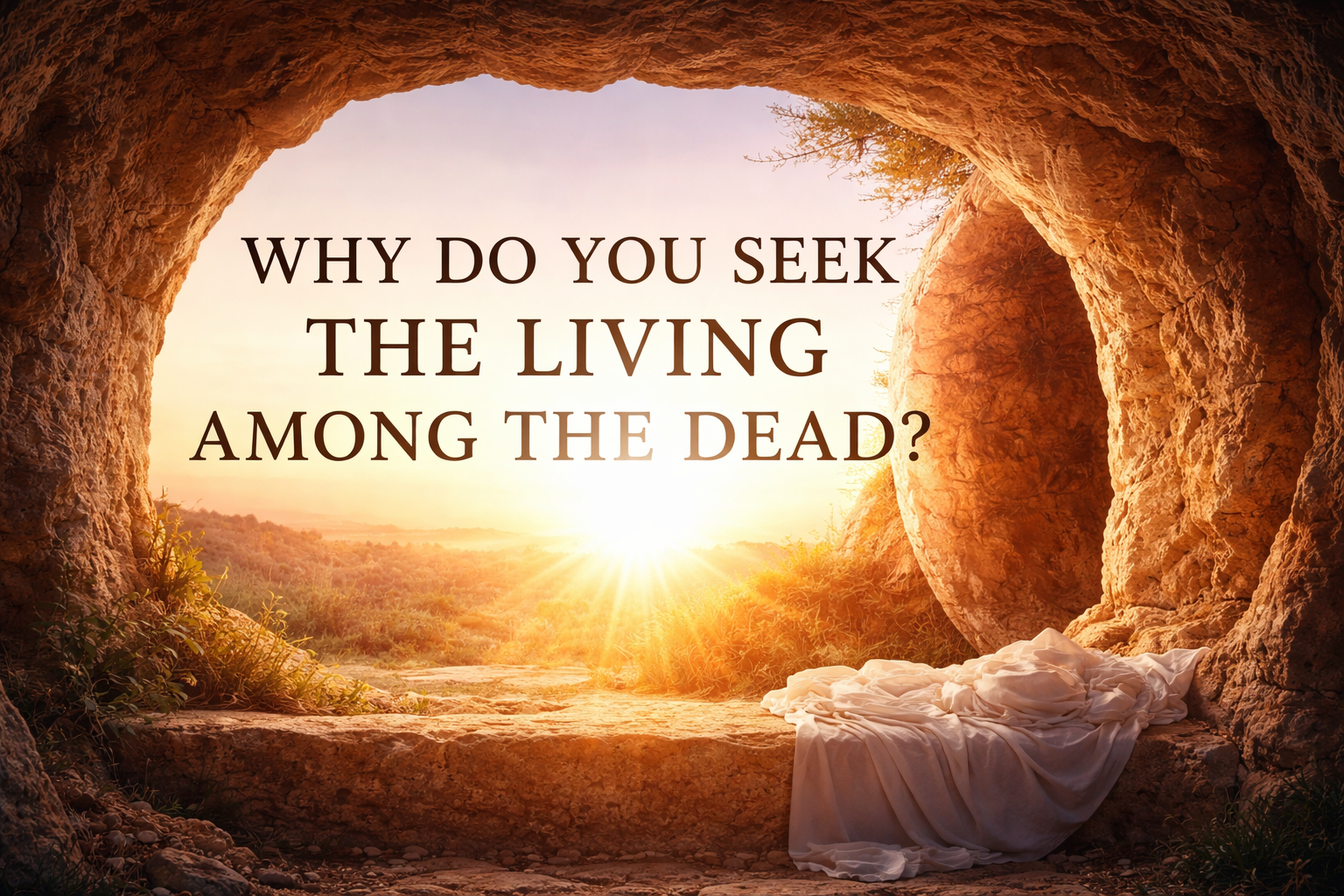
Why Do You Seek the Living Among the Dead?
There are moments in Scripture when one question reaches deeper than a long explanation.
Luke 24 gives us one of those moments.
“Why do you seek the living among the dead? He is not here, but has risen.” — Luke 24:5–6
The women came to the tomb carrying spices for a body. They came in love, in grief, and in habit. They came expecting to find Jesus where death had last placed Him. But heaven met them with a question that still speaks to us now.
We know what it is to return to familiar places. We know what it is to revisit disappointment, to keep company with old pain, to sit down again in patterns that have never given life. Sometimes we do this because those places are comfortable. Sometimes we do it because they are known. And sometimes we do it because even dead things can feel easier than trusting resurrection.
The question is not only whether Jesus rose. The question is whether we are still looking for Him in places where He no longer is.
Key Takeaways
- It is possible to believe in Jesus for eternity while struggling to live in the power of His resurrection today.
- We often return to dead places because they feel familiar, not because they give life.
- The resurrection is not only about forgiveness after death. It is about life with Jesus now.
- The Holy Spirit makes the presence and power of Christ available in every part of ordinary life.
We Return to Tombs More Easily Than We Admit
There is something deeply human about returning to the place where hope seemed to end. The women were not hostile to Jesus. They loved Him. But their expectations had been shaped by death, not resurrection.
We do the same.
We return to old fears. We rehearse old wounds. We revisit disappointment until it feels like wisdom. We keep reaching for what is familiar, even when it has never been fruitful. It is possible to have sincere faith and still keep company with dead things.
Sometimes the dead place is obvious. Sometimes it is bitterness. Sometimes it is shame. Sometimes it is a habit we know is unproductive but still reach for because it is predictable. Sometimes it is simply the assumption that nothing new can happen here.
This is why the angel’s question matters. It uncovers not only where the women were standing, but what they were expecting.
In many ways, spiritual renewal begins when we stop expecting life from what God has already left behind.
Believing in the Cross but Missing the Resurrection
Many believers have no problem trusting Jesus for salvation. We believe He atoned for our sin. We believe His work on the cross is finished. We believe our names are written in the Book of Life because of His mercy.
But often we do not bring that same confidence into the ordinary struggles of life.
When finances tighten, when marriages strain, when work becomes heavy, when children are difficult, when illness enters the story, we can begin living as though Jesus is still in the grave. We trust Him for heaven, but not for Tuesday. We believe in final victory, but we struggle to walk in present life.
Resurrection power is not only for the end of the story. It is for the middle of it too.
This is part of why daily formation matters. Faith is not only agreeing with true things about Jesus. Faith is learning to live from His life in the places where we are most tempted to return to death. If that is an area where your faith feels thin right now, you may also find help in Faith in the Everyday and Growing in Faith.
Why Dead Places Feel Familiar
Dead places often feel safer than living ones because dead places are easier to manage. They require no trust. They ask nothing of us except repetition. A tomb is quiet, contained, and predictable. Resurrection is disruptive. Resurrection calls us forward. Resurrection refuses to leave us where we were.
This is one reason people can remain spiritually stuck while still talking about Jesus. We can keep language of faith while avoiding the movement of life. We can revisit old identities, old habits, and old disappointments because they feel known. But familiar is not the same as fruitful.
If you have been sensing that God is inviting you to stop circling what has already died, there is wisdom in slowing down and asking where He is moving now. A helpful companion piece here is Go Where God Is Moving.
We often seek the living among the dead because the dead asks less of us than the living Christ does.
Key Takeaways: Living in Christ’s Resurrection Power
The resurrection means Jesus is not only remembered. He is present. He is not only admired. He is reigning. He is not only the One who died for sin. He is the living Lord who intercedes, leads, comforts, and gives life.
He is seated at the right hand of God. He is our great High Priest. And the Holy Spirit, the very presence of God, dwells in those who belong to Him.
This means the resurrection is not merely an Easter theme. It is the present reality of Christian life. The same Jesus who conquered the grave is not absent from the strain of work, the ache of grief, the confusion of family tension, or the weight of uncertainty.
He is alive in the middle of real life.
Sometimes what we need most is not a new strategy but a renewed awareness that He is present. That is why practices of stillness and listening matter, not as performance, but as reorientation. You may want to pair this reflection with Hearing God in the Quiet or The Still Small Voice.
Resurrection Life Changes What We Reach For
When we stop seeking the living among the dead, we begin to ask different questions.
- Where is Jesus present here?
- What does trust look like in this circumstance?
- What old pattern am I returning to instead of receiving life?
- What might it mean to live as though He is actually risen?
The invitation is not to deny difficulty. The women still came through grief. The point is not pretending there is no sorrow. The point is that sorrow does not get the last word.
If Jesus is alive, then the final meaning of our lives is no longer determined by pain, disappointment, sin, or the grave. And if Jesus is alive, then the everyday places where we feel stuck are not closed places. They are places where His life can meet us.
Sometimes that meeting looks dramatic. Often it looks simple: courage to keep going, grace to forgive, strength to endure, wisdom for the next step, or peace that settles deeper than explanation.
This is not abstract theology. This is lived resurrection.
Conclusion
The question from Luke 24 is gentle, but it is not casual.
Why do you seek the living among the dead?
It is a question for grief. It is a question for habit. It is a question for the places where we keep returning to what cannot hold life. And it is also a question filled with hope, because it means life has already broken in.
Jesus is not in the tomb. He is risen.
That means you do not have to keep living as though death gets the last word over your mind, your heart, your future, or your story. The resurrection is not only something to celebrate. It is something to live from.
If you are in a season of beginning again, you may also want to read How to Begin Again With God Without Starting Over and visit Start Here.
For readers who also want to explore how resurrection life shapes mission and simple, relational discipleship in broader ministry settings, see Simplicity Church Network’s vision and resources.
FAQs
What does “seek the living among the dead” mean?
It means looking for life, hope, identity, or direction in places marked by spiritual death, old patterns, or past expectations instead of in the risen Christ.
Why do Christians still return to dead places?
Because familiar places can feel safer than trusting God for something new. Old habits, wounds, and thought patterns often feel known even when they no longer give life.
How does the resurrection change daily life?
The resurrection means Jesus is alive and present now. Through the Holy Spirit, His life, peace, wisdom, and strength are available in everyday circumstances.
How do I stop looking for life in dead places?
Begin by honestly naming where you keep returning to what cannot sustain you. Bring those places to Jesus in prayer, remain in Scripture, and ask the Spirit to help you live from resurrection rather than familiarity.
Reflection Questions
- Where in your life are you returning to something familiar that is no longer giving life?
- What challenge are you carrying right now where you most need to remember that Jesus is alive?
- What would it look like to live from resurrection instead of disappointment in this season?
- How is the Holy Spirit inviting you to seek Jesus where He is present, rather than where you last expected Him to be?
Action Steps
- Read Luke 24:1–12 slowly this week and sit with the angel’s question.
- Write down one “dead place” you keep revisiting in thought, habit, or expectation.
- Pray specifically for resurrection life to meet you in one present struggle.
- Choose one simple practice of attentiveness this week such as silence, Scripture meditation, or journaling.
Closing Prayer
Jesus, thank You that the tomb is empty and that You are alive. Forgive me for the places where I keep looking for life in what cannot sustain me. Forgive me for returning to what is familiar instead of trusting what You are doing now. Teach me to live in the reality of Your resurrection. Meet me in the places where I feel weak, disappointed, afraid, or stuck. By Your Spirit, lead me out of old patterns and into the life You have already secured. Amen.