“`html
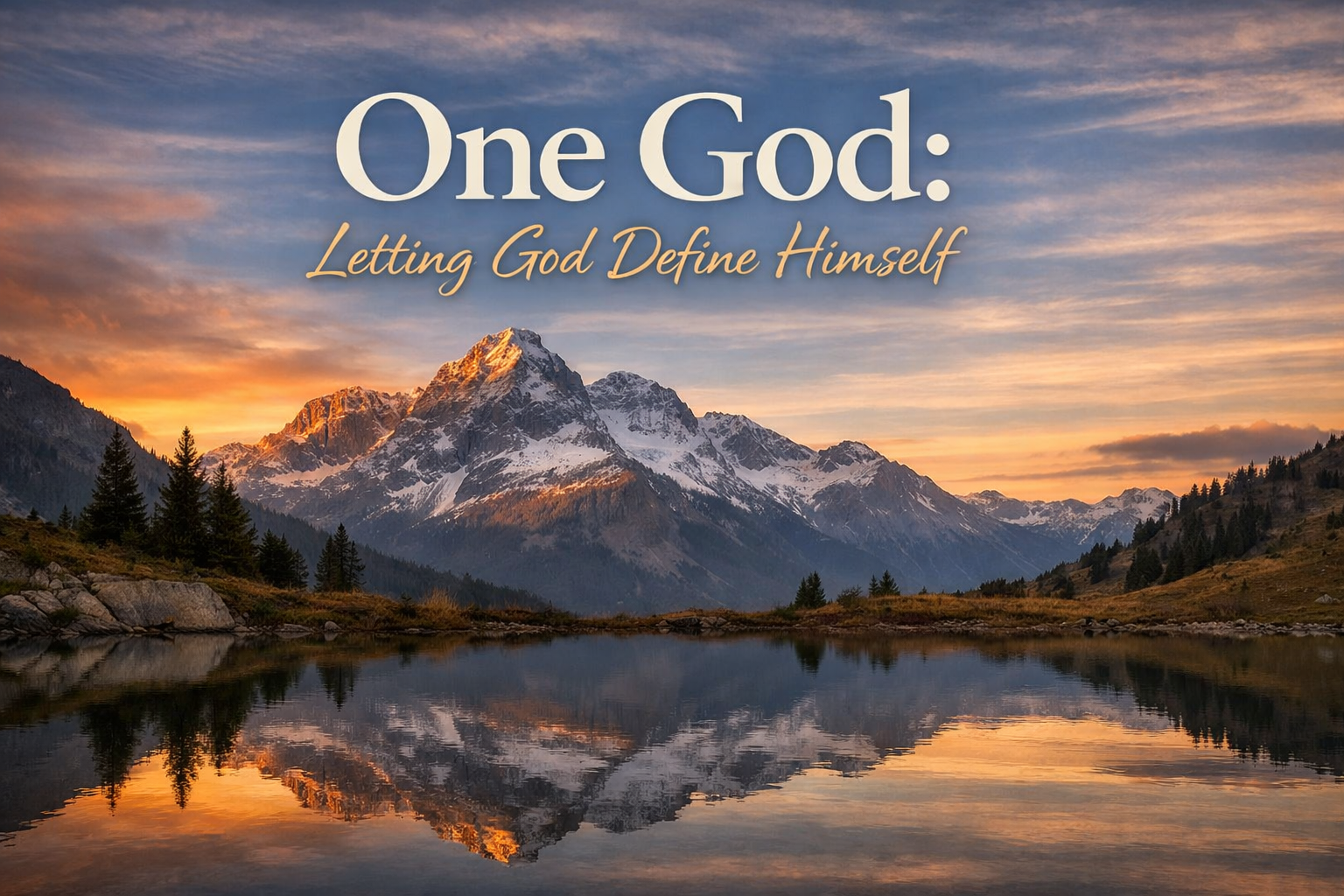
One God: Letting God Define Himself

If you stopped people on the street and asked, “Do you believe in God?” most would likely say yes.
But the deeper question is this:
Who is God?
Because belief alone isn’t the issue. Definition is.
For many of us, that question has been shaped by experience, assumptions, disappointment, or inherited language. But Scripture keeps bringing us back to something steadier: God is not ours to reinvent. He is ours to encounter.
Core Lessons on How God Defines and Reveals Himself
- God is not defined by our opinions. He reveals Himself through Scripture.
- Our understanding of God must begin with what He says about Himself.
- Jesus is the clearest revelation of who God is.
- God’s character is consistent—He is good, holy, loving, and true.
- Spiritual formation begins when we respond to God, not redefine Him.
•••
Starting in the Right Place
“No one has ever seen God; the only God, who is at the Father’s side, He has made Him known.” (John 1:18)
We don’t discover God by imagination. We know Him because He makes Himself known.
That means our beginning point matters. We are not starting with preference, but with revelation.
The Limits of Our Perspective
“In the beginning, God created the heavens and the earth.” (Genesis 1:1)
Before anything existed—He was. God is not part of creation. He is the source of it.
That alone should slow us down. We do not stand over God, analyzing Him from a distance. We stand inside a world He made, learning to receive what He reveals.
We do not define God. God reveals Himself.
•••
How God Reveals Himself
Through Creation
“His invisible attributes… have been clearly perceived… in the things that have been made.” (Romans 1:20)
Creation points beyond itself. It does not replace God, but it does testify that He is there.
Through His Name
“I AM WHO I AM.” (Exodus 3:14)
God reveals Himself as self-existent, unchanging, and personal. He is not becoming something. He simply is.
Through Jesus
“And the Word became flesh and dwelt among us… full of grace and truth.” (John 1:14)
“Whoever has seen Me has seen the Father.” (John 14:9)
If you want to know what God is like, look at Jesus. He is not a partial glimpse of God. He is the clearest revelation of who God is.
God Is One
“Hear, O Israel: The Lord our God, the Lord is one.” (Deuteronomy 6:4)
“You alone are God.” (Psalm 86:10)
Scripture is clear. There is one true God. Not a god created by preference, culture, or imagination, but the living God who reveals Himself and calls us to know Him.
•••
What God Is by Nature
God Is Good
“No one is good except God alone.” (Mark 10:18)
We may do good things, but goodness is not our nature. It is His.
God Is Holy
“You shall be holy, for I am holy.” (1 Peter 1:16)
God is completely pure, set apart, and undefiled.
God Is Love
“God is love.” (1 John 4:8)
Love is not something God does occasionally. It flows from who He is.
God does not borrow these qualities. They flow from His nature.
God Acts Consistently With His Nature
“He cannot deny Himself.” (2 Timothy 2:13)
“It is impossible for God to lie.” (Hebrews 6:18)
Everything God does flows from who He is. His love is never separated from His holiness. His justice is never separated from His goodness. His truth is never separated from His mercy.
He is perfectly consistent with Himself.
•••
The Invitation to Alignment
Am I allowing God to define Himself?
Spiritual formation begins when we let Scripture reshape us instead of reshaping God.
Knowing God Through Jesus
“I am the way, and the truth, and the life.” (John 14:6)
“I am the resurrection and the life.” (John 11:25)
“Before Abraham was, I am.” (John 8:58)
Jesus does not merely teach about God. He reveals Him. To encounter Jesus is to encounter the God who has made Himself known.
Conclusion
God is not asking to be redefined by us. He is inviting us to know Him as He truly is.
That journey begins when we stop forming God out of preference and let Scripture lead us into truth.
Not with control. Not with assumption. But with surrender.
•••
Frequently Asked Questions
Why does it matter how I define God if I believe in Him?
Because how you define God shapes how you trust Him, relate to Him, and respond to Him. Scripture connects knowing God with eternal life (John 17:3).
Aren’t all religions basically pointing to the same God?
Scripture presents a specific revelation of God through Jesus Christ, who said He is the way, the truth, and the life (John 14:6).
What if my view of God has been shaped by hurt?
Scripture invites you to encounter God through Jesus, not just past experiences (John 1:18).
How can I begin to know God for myself?
Start with Scripture, especially the Gospels, and seek Him honestly (Jeremiah 29:13).
What does it mean to let God define Himself?
It means allowing Scripture and the life of Jesus to shape your understanding instead of personal preference.
•••
Reflection Questions
- When I think “God is…,” what words immediately come to mind, and where did those words come from?
- Are there parts of God’s nature in Scripture that I tend to avoid, soften, or redefine?
- How do I respond when God reveals something about Himself that challenges my preferences?
- What do I learn about God by looking closely at the life and words of Jesus?
- Where might God be inviting me to move from opinion into surrender?
Action Steps
- Return to Scripture daily. Spend time this week in John 1, Exodus 3, or one Gospel passage each day.
- Practice listening. In prayer, ask, “Lord, show me who You are.”
- Write and revisit. Journal the words “God is…” and revisit them at the end of the week.
- Look at Jesus intentionally. As you read, ask, “What does this show me about God’s character?”
Closing Prayer
Father,
You are not who we imagine You to be. You are who You have revealed Yourself to be.
Thank You for making Yourself known through creation, through Your Word, and through Jesus.
Where we have reshaped You, correct us. Where we have resisted You, soften us.
Teach us to know You as You truly are and to align our lives with Your truth.
Jesus, reveal the Father to us. Spirit, lead us into truth.
We come not to define You, but to know You.
Amen.
“`